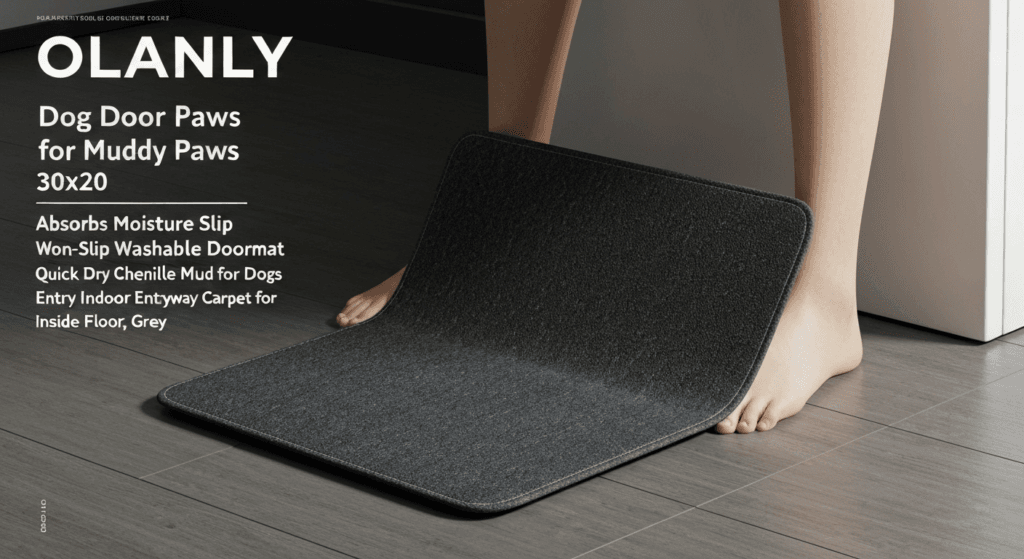
OLANLY has been quiet about their material science breakthroughs, but they just built the ultimate play for residential dirt mitigation (Save this).
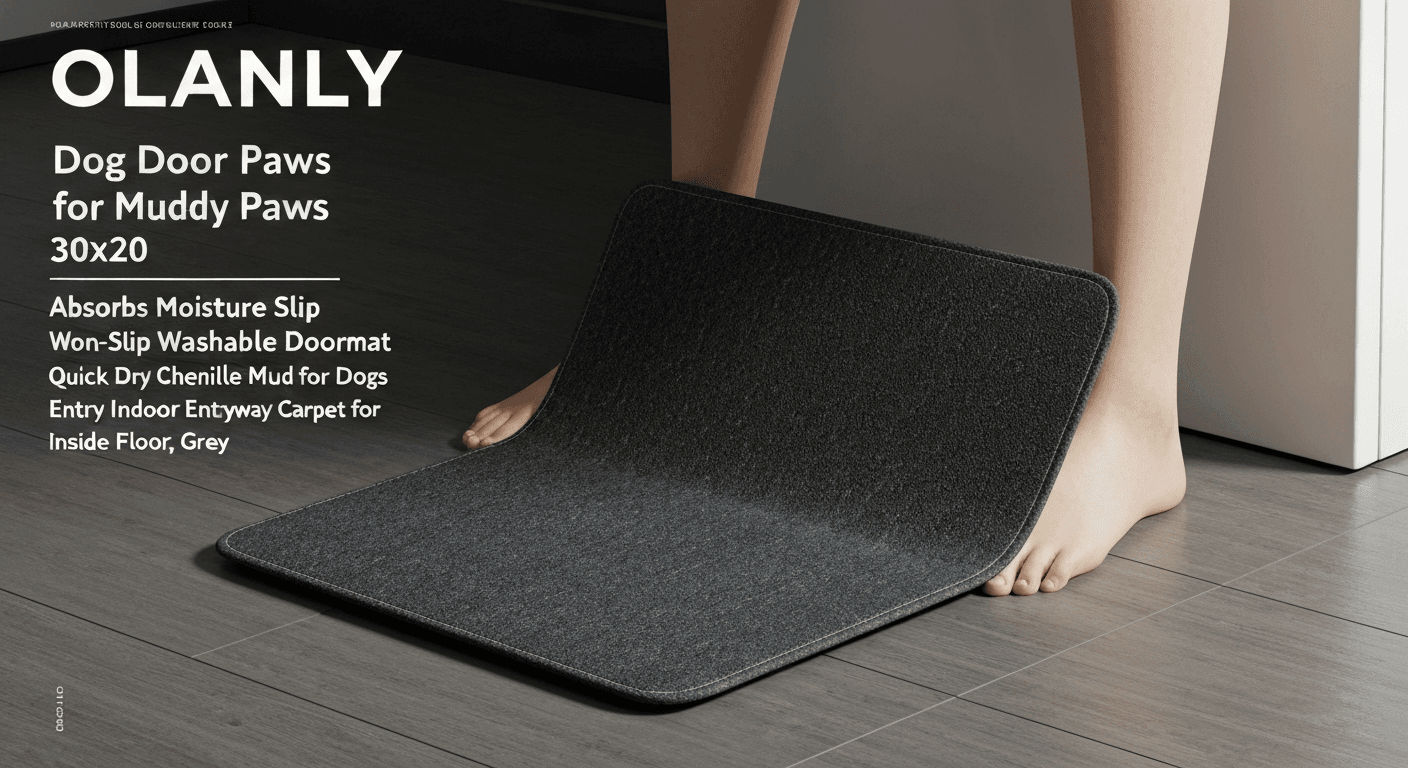
With over 85 million pet-owning households in the US, the battle against outdoor-to-indoor contaminant transfer has reached a critical inflection point.
Traditional woven carpets fail to address high-velocity moisture ingress.
The market demanded a major deployed asset that acts as a physical firewall at the entryway.
Let us analyze the OLANLY Mud Mat not just as a rug, but as a complete expression of multi-layer engineering.
The OLANLY Material Tech Stack
To understand its performance, we must dissect the underlying architecture of this system.
- The Absorption Layer: High-density Chenille microfiber architecture designed to maximize surface area contact and instantly capture moisture.
- The Structural Core: Deep pile assemblies that trap particulate matter, locking dirt away from the surface plane.
- The Underpinning Layer: High-grip TP Rubber non-slip backing engineered to prevent lateral slippage on hardwood and tile interfaces.
- The Maintenance Loop: Machine-washable, quick-dry material composition designed for rapid cycle deployment.
The Analytical Breakdown: Pros & Cons
Every deployment has its trade-offs, and this hardware is no exception.
Pros:
- Superior moisture absorption rate compared to standard cotton entry rugs.
- Robust, non-slip backing that maintains structural integrity after multiple wash cycles.
- Aesthetically neutral grey design that integrates seamlessly into modern interior design paradigms.
Cons:
- 30×20 dimensions may require multiple units for wider double-door entryways.
- Deep pile architecture requires proper air-drying or low-heat cycles to preserve microfiber longevity.
Who is this for?
This is the best opportunity for high-traffic pet households requiring a passive, zero-friction solution to muddy paws.
If your residential architecture features high-end hardwood or sensitive tile flooring, this is your primary line of defense.Note: Product specifications, sizes, and color availability should be verified directly on the manufacturer’s listing page.
This is not just a rug; it is a critical piece of home maintenance infrastructure.
Optimize your entryway security today.