
There’s nothing quite as frustrating as stepping out to admire your beautiful green lawn, only to spot those unwelcome invaders: weeds. For many American homeowners, the desire for a pristine yard clashes with concerns about harsh chemical herbicides. You want a lush, healthy lawn, but you also want to ensure the safety of your family, pets, and the environment. The struggle to find an effective, yet natural, solution for weed control can feel like an endless battle.
The good news is that achieving a weed-free lawn without resorting to synthetic chemicals is entirely possible. You don’t need to be a professional landscaper or call in expensive contractors. With the right knowledge and a few simple, DIY-friendly steps, you can cultivate a vibrant, healthy lawn that naturally resists weeds, all while using organic methods. Let’s dig in and discover how to tackle those persistent weeds the natural way.
Key Takeaways for Organic Weed Control
- Understand Your Weeds: Effective organic control starts with identifying your specific weed types and understanding their life cycles (annual vs. perennial).
- Choose the Right Organic Product: Different organic weed killers target different weeds and stages of growth. Options include corn gluten meal (pre-emergent), acetic acid (vinegar), iron-based products, and horticultural soaps.
- Timing is Everything: Apply organic solutions at the optimal time for maximum effectiveness, often before weeds emerge or when they are young and vulnerable.
- Foster Lawn Health: The best defense against weeds is a strong, dense, and healthy lawn. Proper mowing, watering, and feeding are crucial for long-term success.
Step 1: Understand Your Lawn and Identify Your Weeds
Before you can effectively tackle weeds organically, you need to become a bit of a detective. Start by getting to know your lawn’s specific conditions and, most importantly, identifying the types of weeds that are causing you trouble. Different weeds respond to different treatments, and knowing what you’re up against will save you time and effort.
Ring Alarm Contact Sensor (2nd Gen)
We recommend this solution to resolve the issues discussed in this guide. Key highlights include:
- Monitors doors and windows for opening and closing, sending instant alerts.
- Seamlessly integrates with the Ring Alarm security system (requires Ring Alarm Base Station).
- Easy DIY installation with included mounting tape, no tools required.
Check Price on Amazon →
As an Amazon Associate we earn from qualifying purchases, at no extra cost to you.
Walk your lawn and take note of the common weed culprits. Are they broadleaf weeds like dandelions and clover, or grassy weeds like crabgrass? Are they annuals that complete their life cycle in one season, or perennials that return year after year from established root systems? Many university extension offices and online gardening resources offer excellent weed identification guides. Take pictures, look up descriptions, and get familiar with your enemy. Additionally, consider your lawn’s overall health: what type of grass do you have, what’s your soil like, and how well does it drain? A healthy lawn is your best defense.
- Tip: Use a smartphone app for quick weed identification. Many free apps can identify plants from a photo.
- Tip: Observe where weeds grow most prolifically. This can indicate underlying issues like compacted soil, poor drainage, or nutrient deficiencies.
Step 2: Choose the Best Organic Weed Killer for Your Lawn
Now that you know your weeds, it’s time to select the right organic ammunition. The phrase “what’s the best organic weed killer for lawns” doesn’t have a single answer because the “best” depends on your specific weed type, the time of year, and whether you’re preventing new growth or attacking existing weeds. Organic solutions fall into a few main categories:
Pre-Emergent Organic Weed Killers: These are designed to prevent weed seeds from germinating. The most popular organic option is corn gluten meal. It works by releasing peptides that inhibit root development in newly sprouted seeds. It’s highly effective against annual weeds like crabgrass and dandelions, but it must be applied before the weed seeds sprout. It also provides a slow-release nitrogen boost to your lawn, which is a nice bonus.
Post-Emergent Organic Weed Killers: These target existing weeds.
- Acetic Acid (Horticultural Vinegar): Much stronger than kitchen vinegar (typically 10-20% acetic acid), horticultural vinegar is a non-selective contact killer. It burns the foliage of weeds on contact. It’s effective on young, broadleaf weeds but will also harm your grass if it touches it. Careful, spot application is key.
- Iron-Based Herbicides: Products containing chelated iron (like FeHEDTA) are selective broadleaf weed killers. They work by causing an overload of iron in broadleaf plants, leading to cell damage and death, while turfgrass is largely unaffected. They are effective against dandelions, clover, plantain, and many other common broadleaf weeds.
- Herbicidal Soaps (Fatty Acids): These work by penetrating the waxy cuticle of plant leaves, causing cells to rupture and dehydrate the plant. Like acetic acid, they are non-selective contact killers and best used for spot treatments.
To make this step easier, you’ll want an organic weed killer that targets your specific weed types and growth stage while being safe for your lawn. We’ve rounded up the top-rated options to save you research time.
- Tip: Always read product labels carefully. Even organic products have specific application rates and safety precautions.
- Tip: For new lawns or overseeding, avoid corn gluten meal for at least 60 days after seeding, as it can inhibit grass seed germination too.

Step 3: Prepare Your Lawn for Application
Proper preparation is crucial for maximizing the effectiveness of your chosen organic weed killer. Think of it as setting the stage for success. While specific preparation steps might vary slightly depending on the product you’ve selected, some general guidelines apply.
For most post-emergent liquid applications (like horticultural vinegar or iron-based sprays), it’s often best to apply to dry foliage. This prevents the product from being diluted and ensures it adheres well to the weed leaves. However, some products might recommend a lightly moist lawn to help with absorption, so always check the label. If you’re using a granular pre-emergent like corn gluten meal, applying it to a dry lawn followed by a light watering (or before a light rain) helps activate it and settle it into the soil where it can do its work. Mowing your lawn a day or two before application can also be beneficial, especially for post-emergents, as it exposes the weeds more directly to the treatment and removes taller grass blades that might block the spray.
- Tip: Avoid mowing immediately after applying post-emergent weed killers. Give the product at least 24-48 hours to be absorbed into the weeds.
- Tip: Always wear appropriate personal protective equipment (PPE) as recommended by the product label, even for organic solutions. Gloves and eye protection are usually a good idea.
Step 4: Apply the Organic Weed Killer Safely and Effectively
With your product chosen and your lawn prepared, it’s time for application. Precision and timing are key to getting the best results from organic weed killers while minimizing impact on your desirable turfgrass. The method of application will depend on whether you’re using a granular or liquid product.
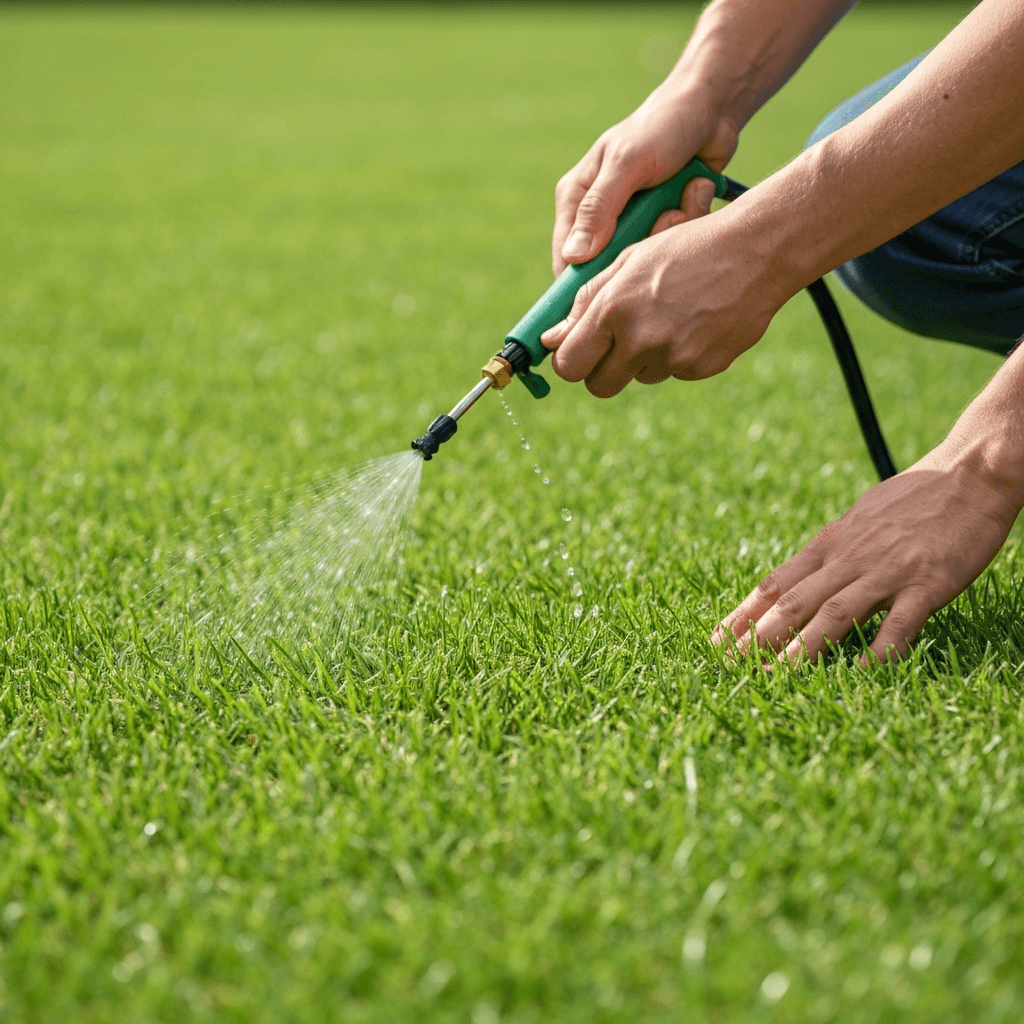
For granular products like corn gluten meal, a broadcast spreader (either a drop spreader or a rotary spreader) is your best friend. Follow the label’s recommended application rate and walk at a consistent pace to ensure even coverage across your entire lawn. After application, a light watering will help activate the product. For liquid products, a pump sprayer or hose-end sprayer is typically used. For non-selective products like horticultural vinegar, focus on spot-treating individual weeds or small patches to avoid harming your grass. For selective products like iron-based herbicides, you can often apply more broadly, but still aim for even coverage. Always apply on a calm day with little to no wind to prevent drift onto desirable plants or into water features. Check the weather forecast; heavy rain immediately after application can wash away the product, reducing its effectiveness.
- Tip: For spot treatments with non-selective sprays, consider using a piece of cardboard or a plastic barrier to shield nearby desirable plants or grass.
- Tip: Mark your sprayer with “Organic Weed Killer” to avoid confusion with other lawn chemicals.
- Tip: Repeat applications may be necessary, especially for stubborn perennial weeds or if the initial application was not fully effective. Consult the product label for reapplication intervals.
Step 5: Maintain a Healthy, Weed-Resistant Lawn
Applying organic weed killer is an excellent step, but the true secret to a perpetually weed-free lawn lies in long-term maintenance and cultivating a healthy turf. A dense, thriving lawn naturally outcompetes weeds for sunlight, water, and nutrients, making it the most effective organic weed control strategy of all.
Focus on proper cultural practices:
- Mow High: Set your mower blade to 3 inches or higher. Taller grass shades the soil, keeping weed seeds from germinating and promoting deeper, stronger roots for your turf.
- Water Deeply and Infrequently: Instead of light, daily sprinkles, water your lawn deeply (about 1 inch per week) to encourage deep root growth. This makes your grass more resilient to drought and stress, which weeds often exploit.
- Fertilize Organically: Use slow-release organic fertilizers to feed your lawn consistently without sudden growth spurts that can make it more susceptible to weeds. Healthy soil biology is key to a healthy lawn.
- Aerate Annually: Core aeration helps relieve soil compaction, allowing air, water, and nutrients to reach grass roots more effectively, promoting stronger growth.
- Overseed Regularly: Periodically spread new grass seed over your existing lawn, especially in bare or thinning spots. This increases turf density, leaving less room for weeds to establish.
- Address Soil Issues: Conduct a soil test every few years to identify any pH imbalances or nutrient deficiencies. Correcting these issues will improve your lawn’s overall health and weed resistance.
By consistently implementing these practices, you’ll create an environment where weeds struggle to survive, and your lawn thrives beautifully and naturally.
Quick Reference Table
| Step # | Action | What You Need |
|---|---|---|
| 1 | Understand Your Lawn and Identify Your Weeds | Weed identification guide (online/app), magnifiying glass (optional), soil test kit (optional) |
| 2 | Choose the Best Organic Weed Killer for Your Lawn | Knowledge of weed types, product labels, reputable organic weed killer (e.g., corn gluten meal, horticultural vinegar, iron-based herbicide) |
| 3 | Prepare Your Lawn for Application | Mower, watering can or hose, personal protective equipment (gloves, eye protection) |
| 4 | Apply the Organic Weed Killer Safely and Effectively | Broadcast spreader (for granular), pump sprayer or hose-end sprayer (for liquid), calm weather conditions, measuring tools, safety barriers (optional) |
| 5 | Maintain a Healthy, Weed-Resistant Lawn | Mower, watering system, organic fertilizer, aerator (rental/service), grass seed, soil test results |
Frequently Asked Questions
Is organic weed killer as effective as chemical weed killer?
Organic weed killers can be highly effective, but they often work differently and may require a bit more patience or repeat applications than synthetic chemicals. For example, pre-emergent organic solutions like corn gluten meal are excellent for prevention, while post-emergent options like horticultural vinegar work on contact. The key is understanding their mechanisms and applying them correctly. Chemical weed killers often offer faster, more systemic results, but organic options provide a safer, environmentally friendly alternative with long-term benefits for soil health.
How long does it take for organic weed killer to work?
The speed at which organic weed killers work varies significantly by product and weed type. Contact killers like horticultural vinegar or herbicidal soaps can show results within hours or a few days, with weeds wilting and browning. Iron-based herbicides typically take 1-3 weeks to show full effects, as the weeds gradually turn black and die. Pre-emergent corn gluten meal doesn’t “kill” existing weeds; instead, it prevents new ones from sprouting, so its effectiveness is measured by the absence of new weeds over time, usually within a few weeks of germination season.
Will organic weed killer harm my grass or pets?
Many organic weed killers are specifically designed to be safe for turfgrass when used as directed. For instance, iron-based products selectively target broadleaf weeds without harming most lawn grasses. Corn gluten meal is also safe for established grass and even acts as a fertilizer. However, non-selective options like horticultural vinegar can burn grass if oversprayed, so careful application is crucial. When it comes to pets, organic solutions are generally much safer than synthetic chemicals. Always allow sprayed areas to dry completely before letting pets back on the lawn, and consult the product label for specific pet-safety guidelines. Many organic products are derived from food-grade ingredients, making them safer for incidental exposure.
When is the best time to apply organic weed killer?
Timing is critical for success. For pre-emergent organic weed killers like corn gluten meal, apply in early spring before soil temperatures consistently reach 50-55°F (when forsythia blooms or daffodils emerge) to prevent crabgrass and other annual weeds. A fall application can help prevent cool-season weeds. For post-emergent organic weed killers, apply when weeds are young and actively growing, typically in spring or fall, and on a warm, sunny day for best results. Avoid applying during extreme heat or drought, as weeds may be stressed and less receptive to treatment, and your lawn could also be more vulnerable.
Can I make my own organic weed killer at home?
Yes, you can make simple homemade organic weed killers, but be aware of their limitations. A common DIY solution is a mixture of household vinegar (5% acetic acid), salt, and dish soap. While this can kill very young, tender weeds, household vinegar is much weaker than horticultural vinegar (10-20% acetic acid) and may only burn the top growth, allowing perennial weeds to regrow from their roots. Salt can also accumulate in the soil and harm your lawn and other desirable plants over time, making it less suitable for broadcast application. Commercial organic weed killers are often formulated for better efficacy, selectivity, and environmental safety when used as directed.
How do I prevent weeds from returning organically?
Prevention is the ultimate organic weed control strategy. The best defense is a thick, healthy lawn that outcompetes weeds. This involves consistent practices like mowing high (3+ inches), watering deeply and infrequently, fertilizing with organic, slow-release products, and aerating annually to alleviate compaction. Overseeding regularly helps maintain lawn density. Additionally, applying organic pre-emergents like corn gluten meal at the right time can prevent new weed seeds from sprouting. Hand-pulling any new invaders promptly before they establish or go to seed is also highly effective for spot control.