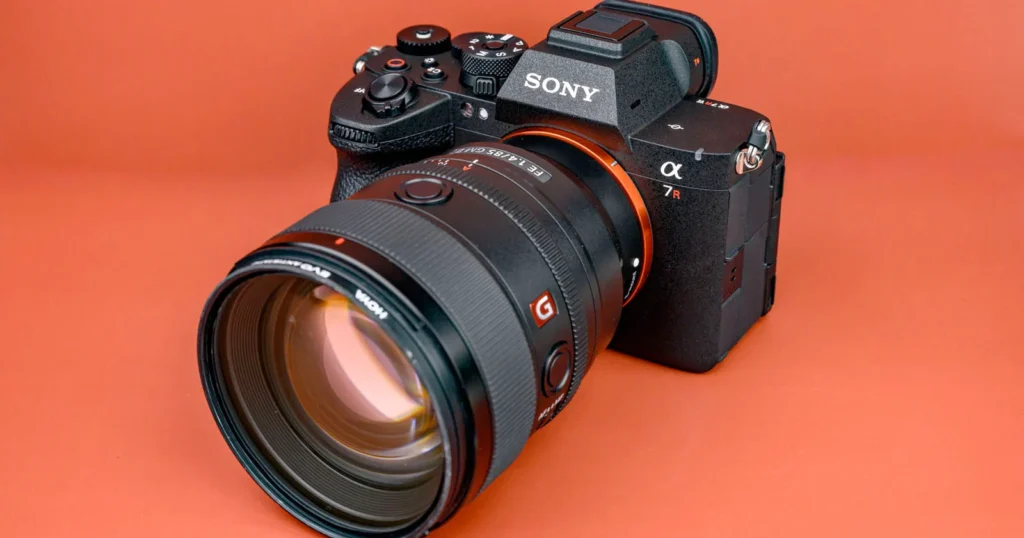
Sony has been quiet about its next-generation imaging architecture, but they just built the ultimate play (Save this).
The global creative economy is no longer just an artistic pursuit; it is a multi-billion dollar asset class demanding enterprise-grade hardware assemblies.
For years, visual artists and commercial studios had to make a costly compromise: choose extreme resolution or high-speed data acquisition.
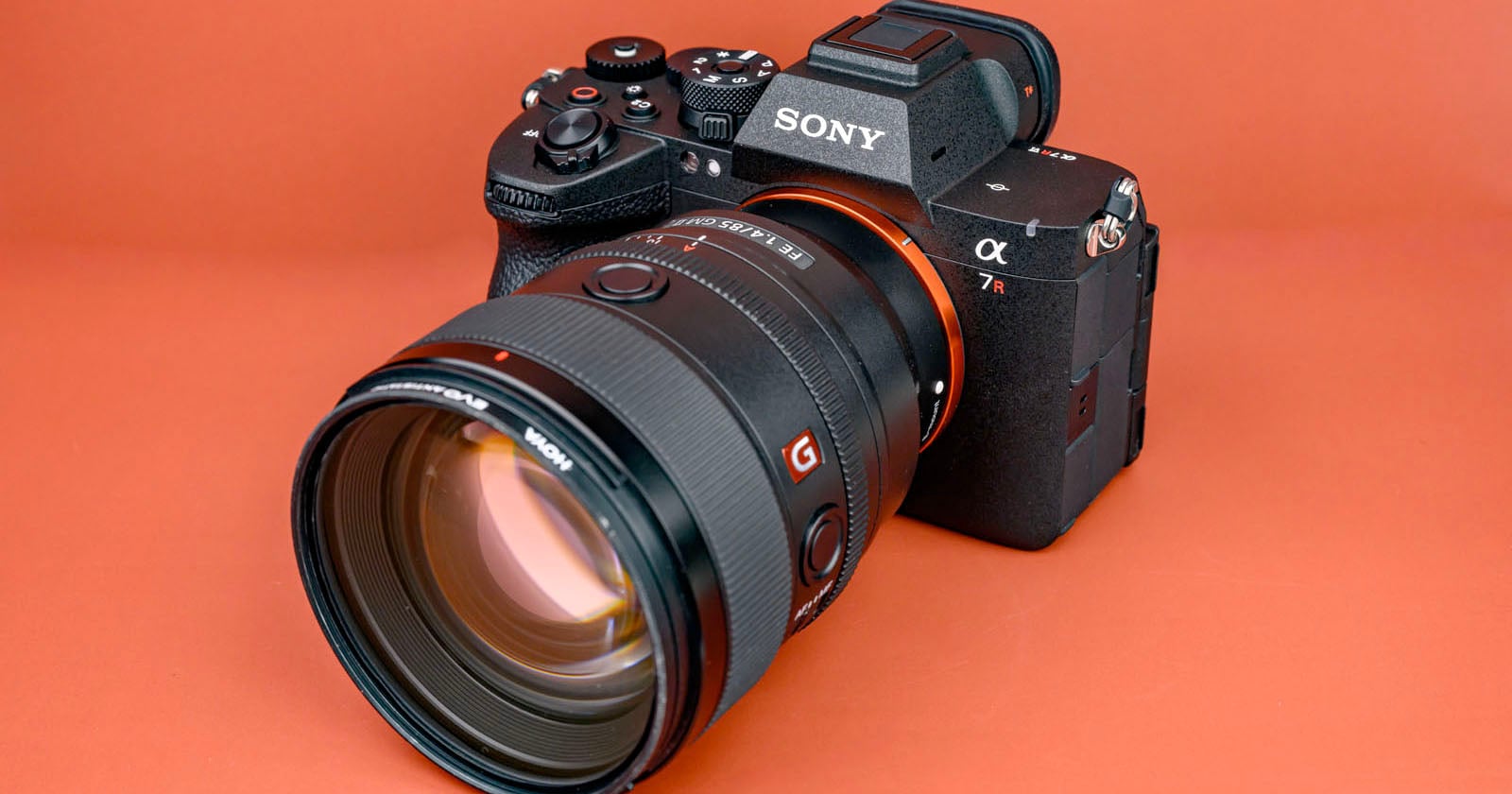
The Sony a7R VI completely dismantles this historical trade-off by combining a massive 66.8MP resolution with an ultra-fast stacked sensor architecture.
| Specification | Sony a7R VI | Sony a7R V | Canon EOS R5 II |
|---|---|---|---|
| Sensor Type | Stacked BSI CMOS | Standard BSI CMOS | Stacked BSI CMOS |
| Resolution | 66.8 Megapixels | 61.0 Megapixels | 45.0 Megapixels |
| Burst Rate | 30 FPS | 10 FPS | 30 FPS |
| Data Throughput | ~2.00 Gigapixels/sec | ~0.61 Gigapixels/sec | ~1.35 Gigapixels/sec |
The Proof: Dismantling the Physics of Imaging
Historically, pushing past 50 megapixels meant accepting a slow, rolling-shutter-prone readout speed that capped burst rates at a modest 10 FPS.
The physics of traditional back-illuminated (BSI) sensors limited how fast analog voltage data could be converted to digital signals and sent to the processor.
With the introduction of the stacked sensor underpinning, Sony has integrated memory directly onto the silicon wafer itself.
This architectural shift allows the sensor to process data in parallel, achieving a throughput calculation of:
$$\text{Throughput} = 66.8 \times 10^6 \text{ pixels} \times 30 \text{ frames/sec} \approx 2.004 \text{ Gigapixels/second}$$
This represents a staggering $228\%$ increase in raw data processing efficiency compared to its direct predecessor, the a7R V.
The Multi-Billion Dollar Tech Stack
To understand why this camera is a major deployed asset for enterprise studios, we must look at it as a complete stack of hardware and software solutions.
The Hardware Layer (The Silicon Stack): The 66.8MP stacked CMOS sensor acts as the foundational layer, utilizing copper-to-copper bonds to connect the pixel section directly to the high-speed digital processing circuit.
The Compute Layer (BIONZ XR Dual-Engine): To handle over two gigapixels of visual data per second, the dual-engine architecture splits the workload, processing real-time autofocus tracking on one engine while handling raw color science on the other.
The Intelligence Layer (AI Coprocessor Gen 2): A dedicated deep-learning processing unit calculates human, animal, and vehicle trajectories up to 120 times per second, guaranteeing that every single frame in a 30 FPS burst is in tack-sharp focus.
The Transmission Layer (I/O Architecture): To sustain these extreme speeds, the camera utilizes dual CFexpress Type A slots, which are essential for clearing the massive buffer without interrupting the creator's workflow.
Market Validation: The Commercial Imperative
In the United States, commercial media production budgets are shifting rapidly toward high-speed, high-fidelity digital assets.
As virtual production and mixed-reality environments expand, the demand for ultra-high-resolution textures captured in real-world environments has skyrocketed.
The Sony a7R VI is the best opportunity for production houses to future-proof their operations, allowing a single operator to capture both commercial-grade print campaigns and high-speed action sequences simultaneously.
By consolidating two specialized camera bodies into one unified system, studios can realize immediate capital expenditure savings and streamlined on-set workflows.
Pros & Cons
- ✅ Unprecedented Throughput: The 66.8MP stacked sensor eliminates rolling shutter artifacts almost entirely.
- ✅ Extreme Burst Speed: 30 FPS raw capture ensures you never miss a critical micro-moment in fast-paced commercial shoots.
- ✅ Advanced AI Integration: Dedicated deep-learning processor tracks subjects with unmatched spatial awareness.
- ❌ High Bandwidth Costs: Sustaining 30 FPS at 66.8MP requires premium, high-speed CFexpress Type A cards.
- ❌ Thermal Overhead: Processing massive amounts of data can lead to increased body temperature during extended continuous shooting.
The Complete Expression of Modern Engineering
The Sony a7R VI is not just an incremental upgrade; it is a structural re-engineering of what an imaging tool can achieve.
It represents the ultimate synthesis of high-fidelity resolution and high-frequency capture speed.
For elite creators, agency owners, and technical directors looking to maintain a competitive edge in a rapidly evolving visual landscape, this camera is the ultimate play.
*This post contains affiliate links. If you make a purchase through these links, we may earn a small commission at no extra cost to you.