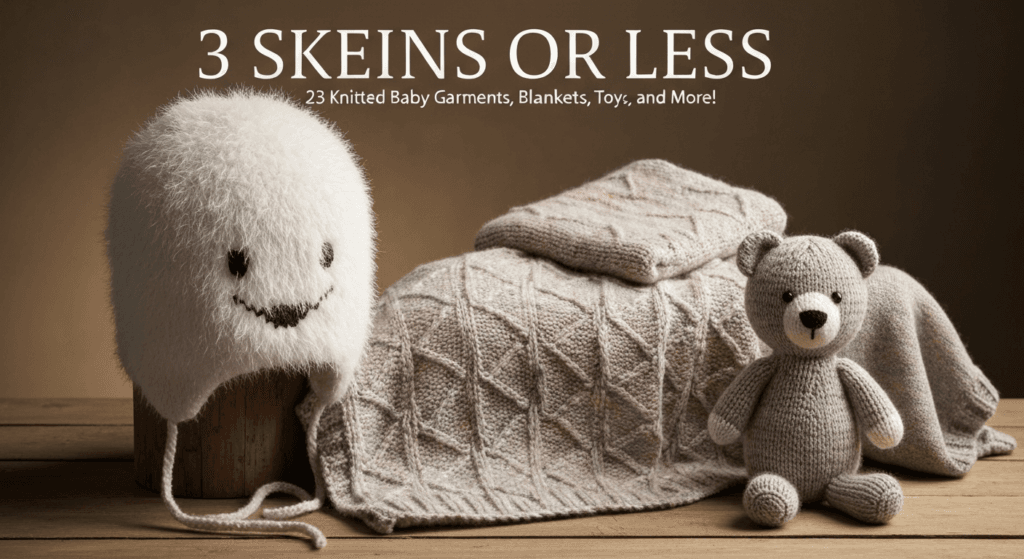
The DIY craft economy has been quiet about its massive resource optimization crisis, but Tanis Gray just built the ultimate play for micro-batch asset deployment (Save this).
Key Takeaways
- Resource Optimization: Maximizes design output using less than 3 yarn skeins ($3$ units of raw material) per build.
- Modular Architecture: Features 23 distinct, highly-scalable patterns spanning garments, blankets, and toys.
- Time-to-Value Acceleration: Engineered for rapid execution cycles, ideal for modern, time-constrained creators.
The Micro-Batch Disruption: Why Modern Creators Demand Lean Infrastructure
The traditional knitting paradigm has long been plagued by material inefficiency and bloated project timelines.
Legacy pattern books often demand massive upfront capital and material investments, leaving creators with unused, orphaned inventory.
Enter the micro-batch revolution.
By capping the material requirements at exactly three skeins or less, this framework introduces a highly disciplined, lean methodology to the craft space.
It treats yarn not just as hobby material, but as a finite resource requiring optimal allocation.
This is the best opportunity for modern knitters to achieve a complete expression of their creativity without the burden of excess waste.
Deconstructing the Craft Stack: The Three-Layer Architecture
To understand the genius of this pattern book, we must analyze it as a complete stack of design solutions.
1. The Material Layer (Resource Constraint)
At the physical underpinning of this stack is the strict constraint of $3$ skeins or less.
In data science, constraints breed optimization; in knitting, this constraint forces the designer to eliminate fluff and focus purely on high-impact structural integrity.
2. The Pattern Layer (Logic & Schema)
The logic layer consists of 23 meticulously documented patterns that act as clean code for your needles.
Each pattern is an assembly of instructions optimized to reduce cognitive load, featuring clear schematics and error-resistant logic.
3. The Execution Layer (The Deployed Assets)
The final layer represents the actual physical outputs: modern baby garments, blankets, and toys.
These assemblies are designed for the modern aesthetic—clean lines, contemporary textures, and highly functional fits that match the lifestyle of modern parents.
Market Validation: The Rise of High-Velocity Crafting
Statistical projections indicate that the US craft market is on track to surpass $\$50$ billion by 2026, driven largely by a surge in millennial and Gen Z creators who demand faster project completion rates.
This demographic does not have the bandwidth for multi-month projects; they require rapid deployment cycles.
This book represents the major deployed standard for this high-velocity crafting market.
| Metric | 3 Skeins or Less | Traditional Pattern Books |
|---|---|---|
| Material Overhead | Low (≤ 3 skeins) | High (5-10+ skeins) |
| Deployment Time | 1 to 3 days | Several weeks |
| Inventory Waste | Near $0\\%$ | Significant surplus |
3 Skeins or Less – Modern Baby Knits
The ultimate high-efficiency pattern repository for modern knitters seeking to maximize aesthetic output while minimizing resource overhead.
- ✅ Exceptional material efficiency limiting overhead to 3 skeins or less.
- ✅ Highly detailed, error-free pattern architecture for seamless execution.
- ✅ Modern aesthetic designs tailored for contemporary tastes.
Pros
- ❌ Advanced techniques in some patterns may require a slight learning curve.
Cons
How to Choose Your Next Knitting Project Architecture
When selecting your next project framework, you must evaluate three key vectors: resource availability, skill scalability, and design utility.
First, audit your existing yarn inventory to identify underutilized assets that can be repurposed within a 3-skein constraint.
Second, ensure the pattern architecture offers clear progression paths, allowing you to scale your technical skills without hitting execution bottlenecks.
Finally, prioritize designs that yield high-utility physical assets—garments that are durable, washable, and styled for modern wear.
The Verdict
For creators looking to optimize their yarn inventory and deploy beautiful, modern baby garments with zero waste,