
There’s nothing quite like the satisfaction of generating your own clean energy, but it can be incredibly frustrating when your solar panels aren’t performing as well as they should be. Many US homeowners invest in solar to reduce their carbon footprint and save on electricity bills, only to find their system’s output dwindling over time. You might notice higher-than-expected utility bills or a drop in the energy production numbers on your monitoring app, leaving you wondering if your investment is truly paying off.
The good news is that often, the solution to declining solar performance is simpler than you think. You don’t need to call in an expensive contractor for every little dip in efficiency. Many common issues can be addressed with a few DIY-friendly steps, empowering you to take control of your energy production and ensure your solar system is working at its peak. Let’s dive into how you can optimize your existing solar panel performance without breaking the bank.
Key Takeaways for Boosting Your Solar Output
- Regular monitoring is crucial to identify performance drops early.
- Clean panels are efficient panels – don’t underestimate the power of a good wash.
- Shade is a solar panel’s worst enemy; trim obstructions for maximum sun exposure.
- Regularly inspect wiring and connections to prevent power loss and ensure safety.
- Consider microinverters or optimizers for advanced, panel-level energy harvesting.
Step 1: Monitor Your System’s Performance Diligently
The first step to improving your solar panel performance is understanding what “normal” looks like for your system. Most modern solar installations come with a monitoring system, often accessible via a smartphone app or a web portal. This system tracks your energy production in real-time, allowing you to see daily, weekly, monthly, and yearly trends. If you’re not regularly checking these numbers, you’re missing out on vital information that can signal a problem.
Looking for the right Home Security Accessories?
If this guide pointed you toward a home security accessories, the easiest next step is to compare the current top-rated and best-selling options. Browse real customer reviews and live prices on Amazon to pick the one that fits your needs and budget.
See Top-Rated Home Security Accessories on Amazon →
As an Amazon Associate we earn from qualifying purchases, at no extra cost to you.
Start by establishing a baseline. Look at your system’s output during clear, sunny days at different times of the year. Compare your current production to historical data or to what your installer estimated. A sudden or gradual drop in output that isn’t explained by weather conditions (like heavy cloud cover or short winter days) is a red flag. Pay attention to individual panel performance if your system uses microinverters or optimizers; this can pinpoint a single underperforming panel rather than a system-wide issue.
Tips for Effective Monitoring:
- Set a Routine: Check your monitoring app weekly or bi-weekly.
- Understand the Data: Learn what metrics like kWh (kilowatt-hours) mean for your home.
- Note Weather Conditions: Always consider the weather when evaluating performance.
- Compare to Neighbors: If possible, compare your output with similar systems in your area (though be mindful of differences in roof angle, shading, etc.).
Step 2: Keep Your Panels Spotlessly Clean
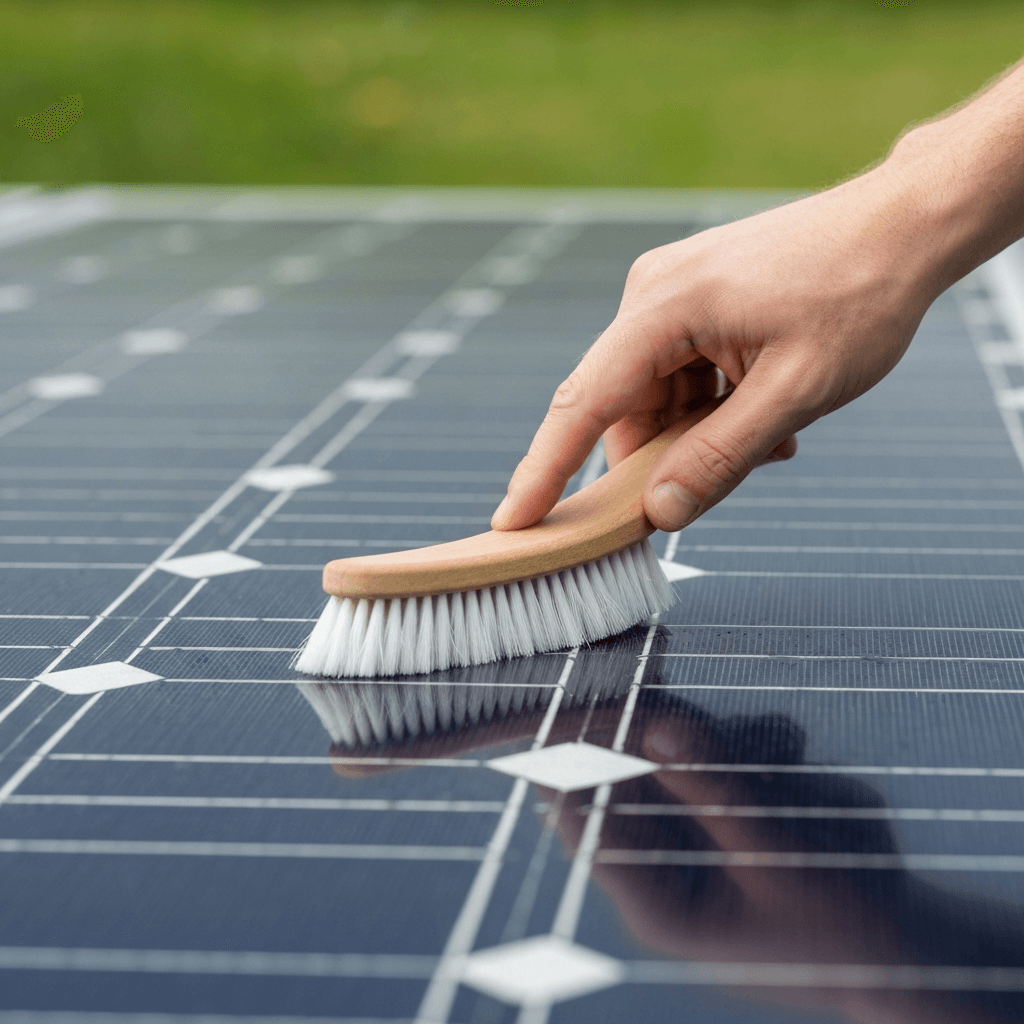
It might sound obvious, but dirt, dust, pollen, bird droppings, and other debris can significantly reduce your solar panels’ efficiency. A layer of grime acts like a filter, preventing sunlight from reaching the photovoltaic cells. Studies have shown that dirty panels can lose anywhere from 5% to 20% of their efficiency, and sometimes even more in heavily polluted or dusty areas. Regular cleaning is one of the simplest and most effective ways to boost your system’s output.
Cleaning your panels is a straightforward DIY task, but safety is paramount. If your panels are easily accessible from the ground or a secure ladder, you can do it yourself. Use a soft brush or sponge, plain water (preferably de-ionized or distilled to avoid mineral deposits), and a squeegee. Avoid harsh detergents, abrasive materials, or high-pressure washers, as these can damage the panel surface or void warranties. The best time to clean is on a cloudy day or early morning/late evening when the panels aren’t hot, to prevent water spots and thermal shock.
To make this step easier, you’ll want a solar panel cleaning kit that includes a long-handled brush with a soft head, a squeegee, and a water-fed pole for reaching higher panels safely from the ground. We’ve rounded up the top-rated options to save you research time.
Tips for Safe and Effective Cleaning:
- Prioritize Safety: Never climb on your roof without proper safety equipment and a spotter. If panels are hard to reach, hire a professional.
- Use the Right Tools: Soft brushes, plain water, and a squeegee are your best friends.
- Clean Regularly: Depending on your environment, cleaning every 3-6 months is a good baseline. More often if you live near dusty roads, farms, or have many trees.
- Check for Damage: While cleaning, gently inspect for cracks, chips, or delamination.

Step 3: Trim Any Shade-Causing Obstructions
Shade is the archenemy of solar panels. Even partial shading on just one part of a panel, or on a single panel in a string, can drastically reduce the output of the entire system. This is due to how solar panels are wired; if one cell or panel is shaded, it acts like a bottleneck, limiting the current flow from all other connected cells or panels. Common culprits include growing trees, new construction, satellite dishes, antennas, or even accumulated debris like leaves or snow.
Take a walk around your property at different times of the day, especially in the morning and late afternoon, and observe your solar array. Look for any shadows cast on the panels. Pay particular attention during different seasons, as the sun’s angle changes throughout the year, meaning a tree that doesn’t cause shade in summer might be a major issue in winter. If you identify trees or bushes as the problem, a strategic trim can make a world of difference.
For minor tree trimming, you might be able to handle it yourself with appropriate tools like a pole saw or loppers. However, for larger branches or trees close to power lines, it’s always best to call a professional arborist. They have the expertise and equipment to safely remove branches without damaging your property or the solar panels themselves.
Tips for Managing Shade:
- Seasonal Checks: Re-evaluate shade patterns quarterly, especially during winter months when the sun is lower.
- Consider Future Growth: When trimming, account for future tree growth.
- Identify All Obstructions: Don’t just focus on trees; check for vents, chimneys, or other roof-mounted items.
- Professional Help: Don’t hesitate to call an arborist for significant tree work, especially near your home or power lines.
Step 4: Inspect Wiring and Connections for Integrity
While solar panels themselves are incredibly durable, the wiring and connections that link them to each other, to your inverter, and to your home’s electrical system are critical points of potential failure or inefficiency. Loose connections, corrosion, or damaged wiring can lead to resistance, which translates directly into power loss and reduced output. These issues can also pose safety risks, including fire hazards or electrical shocks.
A visual inspection of accessible wiring and connections can be part of your routine maintenance. Look for any signs of fraying wires, cracks in insulation, or discoloration that might indicate overheating. Check for any loose cables or connections that might have come undone due to weather, pests, or age. Ensure all conduits and junction boxes are securely closed to protect against moisture and critters. Pay attention to the areas where cables enter and exit the panels, the inverter, and your electrical panel.
While you can perform a basic visual check, any hands-on work with electrical components should be approached with extreme caution. If you notice significant damage, suspect a loose connection within a junction box, or are unsure about any aspect of the wiring, it’s highly recommended to contact a qualified solar technician or electrician. They have the specialized tools and knowledge to safely diagnose and repair electrical issues, ensuring your system operates efficiently and safely.
Tips for Wiring Inspection:
- Safety First: Never touch exposed wires or attempt electrical repairs without proper training and safety gear.
- Visual Check: Look for physical damage, fraying, or loose connections.
- Pest Control: Check for signs of rodent damage to wires (chewing).
- Inverter Check: Ensure your inverter is free of debris and operating normally (check indicator lights).
- Professional Assessment: If in doubt, call a solar professional for a thorough inspection.
Step 5: Consider System Upgrades or Optimizers
Once you’ve tackled the basic maintenance steps, if you’re still looking to squeeze more efficiency out of your system, it might be time to consider some strategic upgrades. Not all solar systems are created equal, and older installations or those with basic string inverters can sometimes benefit significantly from modern technologies designed to maximize individual panel performance.
One of the most impactful upgrades is the addition of power optimizers or microinverters. Traditional string inverter systems are limited by the weakest panel in the string (the “Christmas light effect”). If one panel is shaded or underperforming, it drags down the output of all panels connected to it. Power optimizers, installed on each panel, manage the maximum power point tracking (MPPT) for that specific panel, allowing it to produce at its individual best, regardless of what other panels in the string are doing. Microinverters take this a step further, converting DC to AC power at the individual panel level, offering even greater resilience to shading and panel-level monitoring.
While these upgrades require professional installation, the return on investment can be substantial, especially for systems experiencing persistent shading issues or those where individual panel degradation is becoming apparent. Discuss these options with a trusted solar installer to see if they make sense for your specific setup and budget. They can provide a detailed analysis of your current system and recommend the most cost-effective path to improved performance.
Tips for Considering Upgrades:
- Consult a Professional: Always get expert advice before making significant system changes.
- Evaluate Your Needs: Are you primarily battling shade, or just seeking overall efficiency?
- Understand ROI: Ask your installer for an estimate of how much extra energy you could gain and the payback period.
- Check Warranties: Ensure any upgrades integrate seamlessly with your existing system’s warranties.
Quick Reference Table
| Step # | Action | What You Need |
|---|---|---|
| 1 | Monitor Your System’s Performance Diligently | Solar monitoring app/portal, routine check-ins |
| 2 | Keep Your Panels Spotlessly Clean | Soft brush, squeegee, water (de-ionized recommended), long-handled pole (optional), safety gear |
| 3 | Trim Any Shade-Causing Obstructions | Pruning shears, pole saw, loppers, (or professional arborist) |
| 4 | Inspect Wiring and Connections for Integrity | Flashlight, visual inspection, (or professional solar technician) |
| 5 | Consider System Upgrades or Optimizers | Consultation with a professional solar installer |
Frequently Asked Questions
How often should I clean my solar panels?
The frequency of cleaning depends heavily on your local environment. In most suburban areas with moderate rainfall, cleaning once or twice a year is often sufficient. However, if you live in a dusty region, near agricultural fields, industrial areas, or under trees that drop a lot of pollen or sap, you might need to clean them quarterly or even more frequently. Monitoring your output (Step 1) will give you the best indication; if you see a noticeable dip in production that isn’t weather-related, it’s probably time for a wash.
Always prioritize safety when cleaning. If your panels are on a steep roof or difficult to access, consider hiring a professional cleaning service that specializes in solar panels. They have the right equipment and insurance to do the job safely and effectively.
Can I use regular tap water to clean my solar panels?
Yes, you can generally use regular tap water to clean your solar panels, especially if your tap water is not excessively hard. However, for best results and to avoid water spots, particularly in areas with hard water, de-ionized or distilled water is recommended. Hard water contains minerals that can leave behind deposits when it dries, potentially creating a film that reduces efficiency over time. If you do use tap water, try to clean on a cloudy day or early in the morning/late in the evening to allow the panels to air dry slowly without the sun baking on mineral deposits.
Never use harsh chemicals, abrasive cleaners, or high-pressure washers, as these can scratch the panel surface, damage the anti-reflective coating, or even void your warranty.
Will my solar panels still produce power on cloudy days?
Yes, solar panels will still produce power on cloudy days, but at a reduced capacity. Solar panels convert sunlight, not just direct sunshine, into electricity. Even on overcast days, diffused sunlight still reaches the panels. The amount of electricity generated will depend on the density of the clouds; light overcast conditions might only reduce output by 10-25%, while very heavy, dark clouds could reduce it by 70% or more. This is why your monitoring system will show lower production numbers on cloudy days, which is perfectly normal.
Modern solar panels are designed to capture a wide spectrum of light, making them more efficient even in less-than-ideal conditions. However, clear, direct sunlight will always yield the highest energy production.
How long do solar panels typically last, and when should I consider replacing them?
Most solar panels come with a performance warranty of 20-25 years, guaranteeing that they will still produce at least 80-85% of their original rated power by the end of that period. Physically, solar panels can last much longer, often 30-40 years or more. Degradation is a natural process, where panels slowly lose a small percentage of their efficiency each year (typically 0.5% to 1%).
You should consider replacing panels when their degradation becomes significant enough that the cost of replacement is outweighed by the benefits of increased energy production and potential new incentives. This might be after 25-30 years, or sooner if individual panels suffer irreparable damage (e.g., from severe weather) or if new, significantly more efficient technology becomes available and economically viable for an upgrade.
Can pests like birds or rodents damage my solar panels or wiring?
Yes, pests can absolutely cause damage to your solar system. Birds often nest under panels, and their droppings can accumulate on the panel surface, causing “hot spots” and reducing efficiency. More seriously, rodents like squirrels and rats are notorious for chewing through electrical wiring, which can lead to power loss, system malfunctions, and even fire hazards. Their nesting materials can also pose a fire risk.
To mitigate this, many homeowners install critter guards or mesh around the perimeter of their solar array to prevent pests from getting underneath. Regular visual inspections (Step 4) can help you spot early signs of pest activity or damage. If you suspect a pest problem, it’s best to address it quickly, possibly with professional pest control or a solar technician who can safely inspect and repair any damage.