When considering the safety and security of your home, the immediate question for many savvy homeowners isn’t just “how secure will I be?” but rather, “how much will it cost?” This is especially true for those exploring DIY home security monitoring options, where the promise of significant savings over traditional professionally installed systems is a major draw. Understanding the financial commitment, both upfront for equipment and on an ongoing monthly basis for monitoring services, is crucial for making an informed decision that balances protection with your personal budget.
The landscape of DIY home security monitoring monthly cost comparison can appear complex, with a vast array of devices, features, and subscription models available. To simplify this, we’ve broken down the costs into three distinct tiers: Budget-Friendly, Mid-Range, and High-End. Each tier offers a different level of security, smart home integration, and monitoring capabilities, designed to meet varying needs and financial capacities. This guide will walk you through what to expect at each level, helping you pinpoint the ideal solution for your home in 2026.
Here’s a quick overview of what you can expect:
Looking for the right Home Security Accessories?
If this guide pointed you toward a home security accessories, the easiest next step is to compare the current top-rated and best-selling options. Browse real customer reviews and live prices on Amazon to pick the one that fits your needs and budget.
See Top-Rated Home Security Accessories on Amazon →
As an Amazon Associate we earn from qualifying purchases, at no extra cost to you.
| Setup Level | What’s Included | Estimated Initial Equipment Cost |
|---|---|---|
| Budget-Friendly ($100–$300) | Basic smart hub, 2-3 door/window sensors, 1 motion sensor, self-monitoring via app. Focus on essential entry point alerts. | $100–$300 |
| Mid-Range ($300–$800) | Advanced smart hub, 5-8 sensors, 1-2 indoor cameras, 1 outdoor camera, smart lock, professional monitoring option. Balanced coverage and convenience. | $300–$800 |
| High-End ($800+) | Robust smart home security platform, extensive sensors, multiple indoor/outdoor 2K/4K cameras, smart locks, video doorbell, environmental sensors, professional monitoring with cellular backup and advanced AI features. Comprehensive protection and automation. | $800–$2,000+ |
Budget Setup: $100–$300 (Initial Equipment)
For those looking to secure their home without a significant upfront investment, a budget-friendly DIY home security monitoring setup in 2026 offers a surprisingly effective starting point. This tier focuses on covering the most critical entry points and providing basic deterrence, relying primarily on self-monitoring to keep monthly costs at an absolute minimum, often $0. The initial equipment cost for such a system typically falls between $100 and $300.
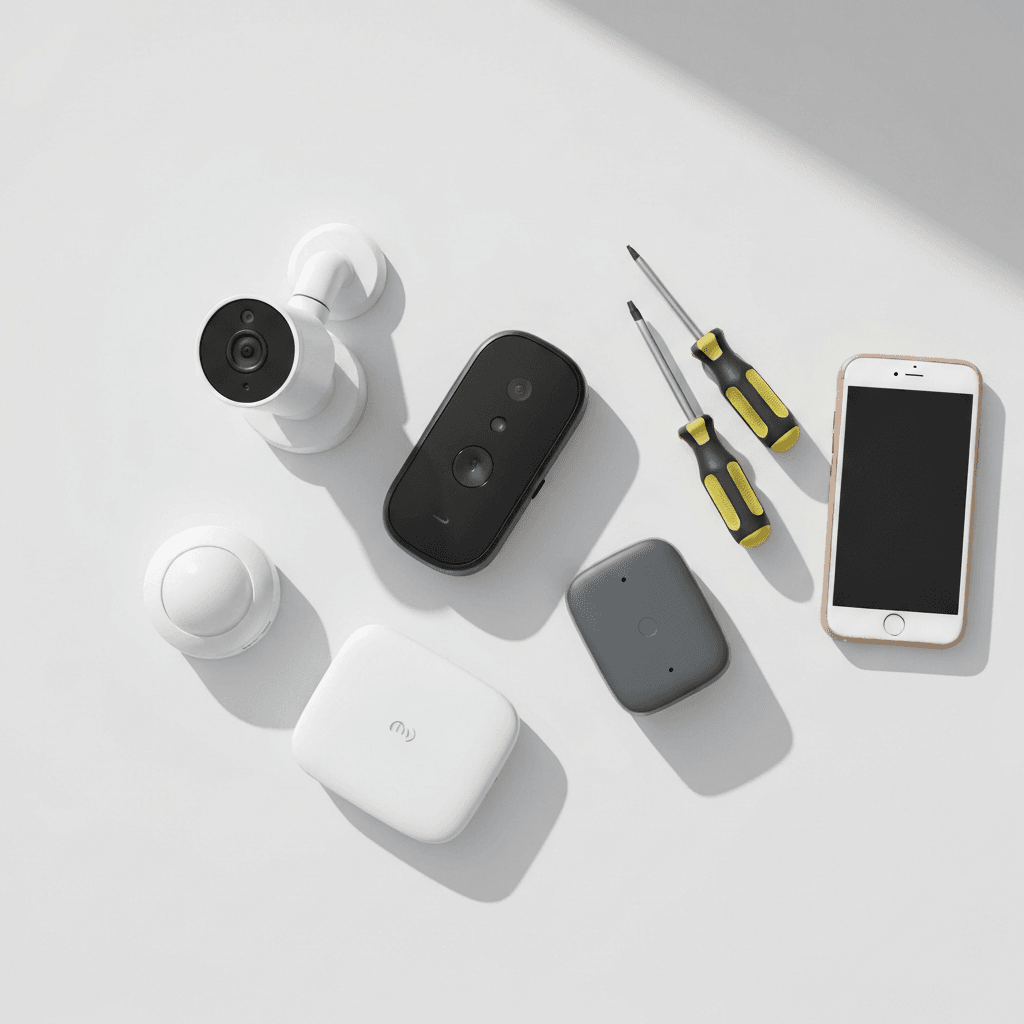
What you primarily get at this level is a foundational security system. This usually includes a central smart hub or base station, which acts as the brain of your setup, communicating with all connected devices. You can expect to include 2-3 door and window sensors to cover main entry points, and often a single motion sensor for a central living area. Some budget kits might even include a basic indoor camera with 720p or 1080p resolution, providing visual verification capabilities via a smartphone app.
The core of the budget DIY home security monitoring experience is self-monitoring. This means you, the homeowner, are responsible for responding to alerts. When a sensor is triggered or motion is detected, your system sends instant notifications directly to your smartphone via its dedicated app. You can then view live camera feeds, sound a local siren, or contact emergency services yourself. While this requires your active attention, it eliminates the recurring expense of professional monitoring, making it the cheapest way to manage your home security long-term. Some budget systems may offer optional cloud storage for video clips at a low monthly fee, typically $3-$7, which can enhance your ability to review incidents.
Trade-offs in this tier are mainly in terms of advanced features and convenience. You might find fewer smart home integrations, shorter battery life for sensors, or less robust camera features (like advanced AI detection or high-resolution night vision). Installation is generally straightforward, relying on adhesive mounts and simple pairing processes. Brands like Wyze, TP-Link Kasa, and some entry-level Ring Alarm or SimpliSafe components (purchased individually) are good examples of what fits into this budget. While it offers essential protection, it requires a more hands-on approach to monitoring and response.

Mid-Range Setup: $300–$800 (Initial Equipment)
Stepping up to a mid-range DIY home security monitoring setup in 2026 unlocks a significantly more robust and convenient experience. With an initial equipment investment ranging from $300 to $800, this tier provides a comprehensive balance of enhanced security, smart home integration, and the crucial option of professional monitoring. This is often the sweet spot for homeowners seeking reliable protection without the premium price tag of high-end systems.
At this level, your central smart hub is more capable, often supporting a wider range of smart home protocols (like Z-Wave, Zigbee, or Matter) for broader compatibility. You’ll typically get a more extensive array of sensors, including 5-8 door/window sensors to cover more entry points, 1-2 motion sensors, and potentially glass break sensors. Visual security is notably upgraded with 1-2 high-definition (1080p) indoor cameras, often featuring two-way audio and improved night vision, plus at least one durable, weatherproof outdoor security camera. Many mid-range systems also integrate a smart lock, allowing keyless entry and remote access control, significantly boosting both security and convenience.
The most significant upgrade in the mid-range tier is the accessibility and affordability of professional monitoring. While self-monitoring remains an option, many systems in this category offer monthly professional monitoring plans ranging from $15 to $30. These plans connect your system to a central monitoring station, where trained professionals can dispatch emergency services (police, fire, medical) when an alarm is triggered and verified. This provides immense peace of mind, especially when you’re away from home or unable to respond to alerts yourself. These plans often include cellular backup, ensuring your system remains connected even if your internet goes down, and typically come with cloud storage for camera footage.
The extra spend makes sense for homeowners who desire a more hands-off approach to security response, better coverage for their property, and seamless integration with other smart home devices. Features like advanced motion detection (distinguishing pets from people), customizable alerts, and scheduled automations become standard. Brands like Ring Alarm, SimpliSafe, Abode, and some advanced Eufy or Arlo systems fit well into this category. The installation remains DIY-friendly, but the system’s intelligence and monitoring options provide a significant leap in overall home protection and convenience, making the monthly cost comparison for professional monitoring a key consideration here.
High-End Setup: $800+ (Initial Equipment)
For those who demand the utmost in home security, smart home integration, and peace of mind, a high-end DIY home security monitoring setup in 2026 represents the pinnacle of what’s achievable without professional installation services. With an initial equipment investment typically starting at $800 and often reaching $2,000 or more, this tier delivers professional-grade options, extensive coverage, and cutting-edge technology.
A high-end system revolves around an extremely robust smart home security platform, often acting as a central hub for virtually every smart device in your home. You’ll get an extensive array of sensors, including numerous door/window sensors, multiple motion and glass break sensors, and often specialized environmental sensors for smoke, carbon monoxide, and water leaks. Visual surveillance is paramount, featuring multiple 2K or even 4K resolution indoor and outdoor cameras with advanced AI capabilities (person/vehicle detection, facial recognition, package detection). A high-end video doorbell, smart locks on all key entry points, and smart garage door openers are standard inclusions, providing comprehensive access control.
What truly justifies the premium in this tier is the unparalleled monitoring and automation. Professional monitoring is almost always included or highly recommended, with monthly costs typically ranging from $30 to $60+. These plans often come with premium features like 24/7 cellular backup, ensuring uninterrupted communication with the monitoring center even during power or internet outages. Advanced AI features process camera feeds to minimize false alarms and provide highly specific alerts. Geofencing, complex automation rules (e.g., lights turn on when motion is detected after dark, doors lock when you leave), and seamless integration with voice assistants (Alexa, Google Assistant) and other smart home ecosystems (Apple HomeKit, SmartThings) are deeply embedded.
High-end systems offer a truly proactive security posture. They can learn your routines, adapt to changing conditions, and provide granular control over every aspect of your home’s security and automation. While the installation is still DIY, the complexity of configuring advanced automations and integrating a multitude of devices might require a bit more technical comfort. Brands like Vivint (though often requiring contracts, their equipment can be purchased upfront DIY in some cases), higher-tier SimpliSafe or Ring Alarm Pro packages, and custom setups built around platforms like Home Assistant with premium components from manufacturers like Ubiquiti, Reolink, or high-end Z-Wave/Zigbee devices, exemplify this tier. The investment ensures maximum protection, unparalleled convenience, and a truly smart, secure home.
What Affects the Total Cost?
Understanding the factors that influence the total cost of your DIY home security monitoring system is key to budgeting effectively. Beyond the initial tier selection, several elements will shape your final expenditure, both upfront and on an ongoing basis.
DIY vs Professional Installation
The decision to go DIY is arguably the single largest cost-saving factor for home security. Professional installation services for a typical home security system can range from $99 to $500 or even more, depending on the complexity of the system and the size of your home. This fee covers the labor of technicians who will mount cameras, install sensors, configure your hub, and ensure everything is working correctly. By choosing the DIY route, you completely eliminate this upfront cost.
For a mid-range system, for example, a professional installation might add an extra $200-$300 to your initial bill. Over the lifespan of your system, this represents a significant saving that you can reallocate towards better equipment or a more comprehensive monitoring plan. While DIY requires your time and effort, most modern DIY security systems are designed for easy installation, often involving peel-and-stick sensors and app-guided setup, making the savings well worth the minimal effort for many homeowners.
Equipment Costs
The core of your DIY home security monitoring system’s upfront cost lies in the equipment. These prices can fluctuate based on brand, features, and quality:
- Smart Hub/Base Station: The central controller. Basic models are $50-$100, while advanced hubs with cellular backup and smart home integration can be $100-$300.
- Door/Window Sensors: Essential for entry points. Expect $15-$30 each, or multi-packs for $30-$60.
- Motion Sensors: For detecting movement in rooms. Typically $25-$45 each.
- Glass Break Sensors: Detects the sound of breaking glass. Around $30-$50 each.
- Indoor Security Cameras (1080p-2K): Basic models are $30-$70, while those with advanced features like pan/tilt, AI detection, or local storage can be $70-$150.
- Outdoor Security Cameras (1080p-4K): More robust and weatherproof. Basic 1080p models are $80-$150, while 2K/4K cameras with spotlights, two-way audio, and advanced analytics can be $150-$300+.
- Video Doorbells: Range from $80 for basic models to $250+ for 2K/4K resolution with advanced features.
- Smart Locks: Keypad or app-controlled. $120-$250, depending on features and brand.
- Environmental Sensors (Smoke, CO, Water Leak): Range from $30-$80 each.
- Sirens/Alarms: Standalone units for added deterrence, $20-$50.
The quantity and quality of these components directly impact your initial equipment cost. Opting for a bundled kit often provides better value than buying individual components.
Ongoing Monthly Costs
This is where the “DIY home security monitoring monthly cost comparison” truly comes into play. These recurring fees are crucial for maintaining your system’s functionality and accessing advanced features:
- Self-Monitoring: Often $0 per month. You receive alerts on your smartphone and are responsible for contacting emergency services. Some systems may charge a minimal fee ($3-$7) for basic cloud video storage.
- Basic Professional Monitoring: Typically $15-$30 per month. This connects your system to a central monitoring station that dispatches emergency services upon alarm verification. It often includes basic cloud storage and app access.
- Advanced Professional Monitoring: Ranges from $30-$60+ per month. This tier usually includes everything in basic monitoring plus cellular backup (essential for internet outages), extended cloud storage, advanced AI features (like smart alerts), comprehensive smart home integration, and sometimes extended warranties or premium support.
- Cloud Storage: If not bundled with professional monitoring, separate cloud storage plans for cameras can cost $3-$10 per camera per month, or $10-$20 for multiple cameras.
- Batteries and Maintenance: While not a direct monthly fee, budgeting $20-$50 annually for replacement batteries for sensors and occasional maintenance (e.g., cleaning camera lenses, firmware updates) is a realistic ongoing cost. Most sensors use standard AA, AAA, or coin-cell batteries that last 1-3 years.
When comparing DIY home security monitoring monthly cost options, consider not just the sticker price but the features included in the subscription plan and whether they align with your security needs and desired level of responsiveness.
Complete Shopping List (Mid-Range Setup)
For a balanced and effective DIY home security monitoring system, a mid-range setup offers excellent value and comprehensive protection. Here’s a typical shopping list with estimated 2026 price ranges:
- Smart Security Hub/Base Station: This is the brain of your system, often with a built-in siren and cellular backup option. You can find smart security hubs for $100–$250 — we’ve compared the best options so you can choose with confidence.
- Door/Window Sensors (5-pack): Essential for perimeter security on main entry points. Expect to pay $40–$80 for a multi-pack.
- Motion Sensor (2 units): Good for covering larger areas indoors, such as living rooms or hallways. Typically $30–$50 each.
- Indoor Security Camera (1080p with two-way audio): For visual monitoring and communication within key areas. Prices are usually $40–$90.
- Outdoor Security Camera (1080p/2K, weatherproof, spotlight): More robust, often with advanced features like person detection. You can find outdoor security cameras for $100–$200 — we’ve compared the best options so you can choose with confidence.
- Smart Lock (Keypad/App Controlled): Adds an extra layer of convenience and security to your main entry door. These range from $130–$280.
- Video Doorbell (1080p/2K): For front door monitoring, package detection, and two-way communication. Expect to pay $100–$200.
- Glass Break Sensor (1 unit): To detect the sound of breaking glass in a critical room. Around $40–$60.
- Yard Sign/Window Decals: For visible deterrence, often included with kits or $10–$25 for a quality set.
- Extra Batteries/Power Adapters: Budget $20–$50 annually for replacements, depending on sensor type and usage.
This list provides a solid foundation for a secure and smart home, balancing cost with functionality and the option for reliable professional monitoring.
How to Cut Costs Without Cutting Corners
Achieving effective home security on a budget is entirely possible with smart planning and strategic choices. Here are 3-5 practical, specific money-saving tips for your DIY home security monitoring project:
- Start Small and Expand Gradually: You don’t need to secure every single window on day one. Begin with essential components like a central hub, main door sensors, and a single motion sensor for a high-traffic area. As your budget allows, you can gradually add more sensors, cameras, and smart devices. Many DIY systems are modular, making this expansion seamless.
- Leverage Sales and Bundle Deals: Major retailers and security brands frequently offer significant discounts during holidays (Black Friday, Prime Day, Memorial Day) or seasonal sales. Look for starter kits or bundles that combine a hub with several sensors and a camera; these are almost always more cost-effective than buying individual components. Sign up for newsletters from your preferred brands to get alert on upcoming promotions.
- Opt for Self-Monitoring Initially: The biggest ongoing cost in home security is often professional monitoring. Start with a self-monitored system, which typically has $0 monthly fees. This allows you to receive alerts directly to your phone and decide on your own response. If you later find you need the added peace of mind or insurance benefits of professional monitoring, you can usually upgrade your plan for a monthly fee. This is a prime example of effective DIY home security monitoring monthly cost comparison.
- Utilize Refurbished or Open-Box Equipment: Many reputable brands and retailers offer certified refurbished security devices or open-box items at a significant discount (20-40% off). These products are typically tested, cleaned, and come with a warranty, offering a great way to acquire higher-end equipment at a mid-range price. Always ensure they come with a clear return policy and warranty.
- Compare Monitoring Plans Closely: If you decide on professional monitoring, don’t just pick the first plan offered. Compare the DIY home security monitoring monthly cost comparison across different providers (e.g., Ring, SimpliSafe, Abode). Look at what’s included in each tier – cellular backup, cloud storage length, smart home integrations – and choose a plan that offers the best value for your specific needs, avoiding unnecessary features that drive up the monthly cost.
Frequently Asked Questions
Is DIY home security monitoring reliable?
Yes, DIY home security monitoring can be very reliable, especially with modern systems. Reliability largely depends on the quality of the equipment you choose, proper installation, and your commitment to responding to alerts if you’re self-monitoring. Systems with professional monitoring and cellular backup offer an even higher degree of reliability.
What’s the cheapest way to monitor my home?
The cheapest way to monitor your home is through self-monitoring. This involves using a DIY security system that sends alerts directly to your smartphone via an app. There are typically no monthly fees for this service, though some systems may charge a small fee ($3-$7) for basic cloud video storage or advanced app features. You are responsible for contacting emergency services yourself.
Do I really need professional monitoring?
Whether you need professional monitoring depends on your personal circumstances, risk tolerance, and local requirements. Professional monitoring provides peace of mind by ensuring a central station dispatches emergency services if an alarm is triggered and verified, even if you’re unavailable. It can also sometimes lower homeowner’s insurance premiums. If you travel frequently, have a busy schedule, or prefer not to be the first responder, professional monitoring is a worthwhile investment. However, many find self-monitoring sufficient for their needs.
How much does cellular backup add to monthly costs?
Cellular backup is a crucial feature that allows your security system to communicate with the monitoring station even if your internet connection goes down. It’s typically included in mid-range to high-end professional monitoring plans. If offered as an add-on or in lower-tier plans, it usually adds an extra $5-$15 per month to your DIY home security monitoring monthly cost, depending on the provider and the data plan.
Can I use different brands of security devices together?
It depends. Many smart home security systems are designed as ecosystems, where devices from the same brand work seamlessly together. However, some systems support open standards like Z-Wave, Zigbee, or Matter, which allows for compatibility with a wider range of third-party devices. Platforms like Samsung SmartThings or Home Assistant are designed to integrate devices from various manufacturers. Always check device compatibility before purchasing, as mixing brands can sometimes lead to limited functionality or setup complexities.